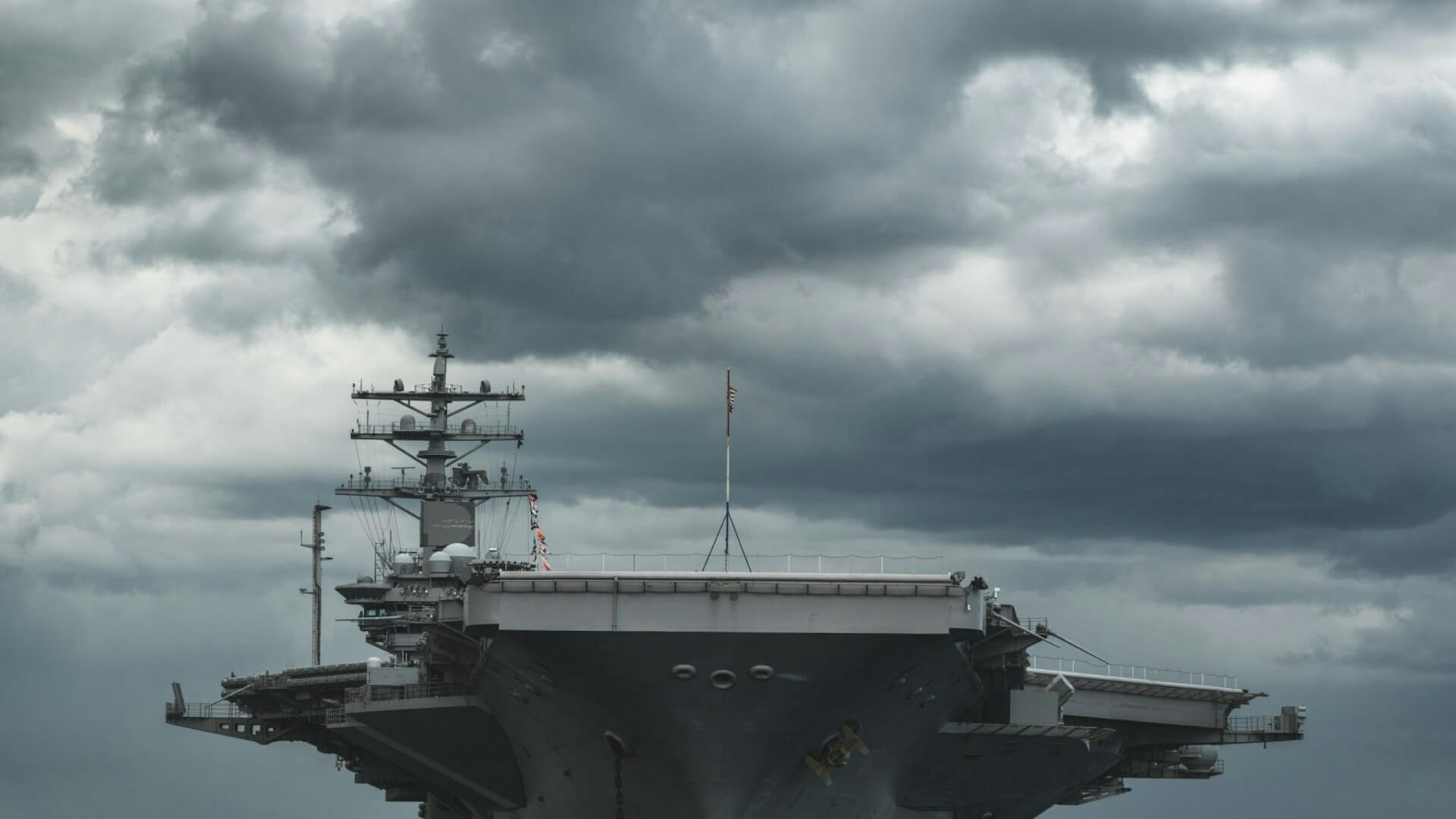
More than 90 percent of the equipment and supplies American forces would need in a major overseas contingency moves by sea, carried by a government-owned surge sealift fleet that most of the defense industrial base never thinks about (GAO, 2017). The fleet is old, thinly crewed, and shrinking. The tanks, munitions, and repair parts this blog series has spent months examining are only as deterrent as the ships that can deliver them, and the ships are the least modernized link in the entire chain.
The Merchant Marine has been called the fourth arm of defense since the Second World War. In 2026, the fourth arm is rusting at anchor.
What Turbo Activation Revealed
In September 2019, U.S. Transportation Command ran the largest no-notice activation of the surge sealift fleet since 2003, ordering dozens of Ready Reserve Force and Military Sealift Command ships to sea on five days' notice (USNI News, 2020). The after-action arithmetic was blunt: against a readiness goal of 85 percent, the exercise produced a cumulative fleet success rate of 40.7 percent (USTRANSCOM Turbo Activation 19-Plus After Action Report, 2019). Combatant commanders planning against millions of square feet of cargo capacity can, in practice, count on well under half of it arriving on schedule.
Subsequent activations have been smaller, and the return on post-2019 investments has been slow to appear in the readiness numbers. The exercise did not reveal a new problem. It quantified an old one.
The Age Problem
The surge fleet's ships average well over forty years of age, and a meaningful share still run steam plants that the commercial world abandoned decades ago. Steam engineering is now a boutique skill; the mariners who hold the certifications are aging out faster than replacements qualify. Every year of deferred recapitalization compounds both problems: the hulls get older, and the pool of people who can operate them gets smaller.
Recapitalization, as currently programmed, leans on purchasing and converting used commercial vessels at a cadence of roughly two per year, a schedule that does not complete until the early 2030s (USNI News, 2023). Against the contingency timelines this series has examined, that is a long runway for the one capability everything else depends on.
The Mariner Gap
Ships without crews are warehouses. The Maritime Administration has estimated the nation is short on the order of 1,800 credentialed merchant mariners needed to sustain simultaneous operation of the surge fleet and the commercial fleet, a gap that predates the pandemic and has widened since (USNI News, 2023). Activation exercises borrow crews from Jones Act vessels and mariners between contracts. A ten-day exercise can absorb that. A two-year contingency cannot. This is the maritime version of the workforce story that runs through the submarine and munitions posts: a generational demographic problem wearing a hiring-problem costume.
Where the Supplier Opportunity Lives
Sealift is not only a Navy and MARAD problem. It is a market for the Tier-2 and Tier-3 industrial base (MARAD, 2026): ship repair yards on all three coasts, obsolete-parts manufacturing for steam and legacy diesel plants, conversion engineering for purchased used tonnage, and the marine electronics refits that bring 1980s hulls into 2020s connectivity and navigation standards.
What Suppliers Should Do Now
Qualify for RRF repair and alteration work: the used-vessel conversion pipeline and service-life extensions will run for a decade. Yards and marine suppliers that qualify early own a durable backlog.
Solve parts obsolescence deliberately: steam plant components, legacy switchgear, and out-of-production propulsion parts are a reverse-engineering and small-batch manufacturing market with few qualified players.
Invest in mariner pipelines: state maritime academies and apprenticeship programs are the sealift equivalent of the submarine trades campaign. Companies that co-fund cadet berths and sea-time opportunities are buying their own future crews.
Treat sealift in your contingency math: primes and logisticians modeling wartime delivery schedules should apply the demonstrated 40 percent availability figure, not the 85 percent goal, until the readiness data says otherwise.
The Ships That Carry the War
Every industrial-base success this series has documented, the 155mm ramp, the missile multi-year buys, the battery and rare earth investments, terminates at a pier. If the ships cannot sail, the arsenal does not deploy; it accumulates. The munitions math problem at least trends in the right direction. The sealift math has been flat for a generation. Deterrence is measured in what arrives, not what exists. The fourth arm of defense needs the same industrial energy the other three have finally received.