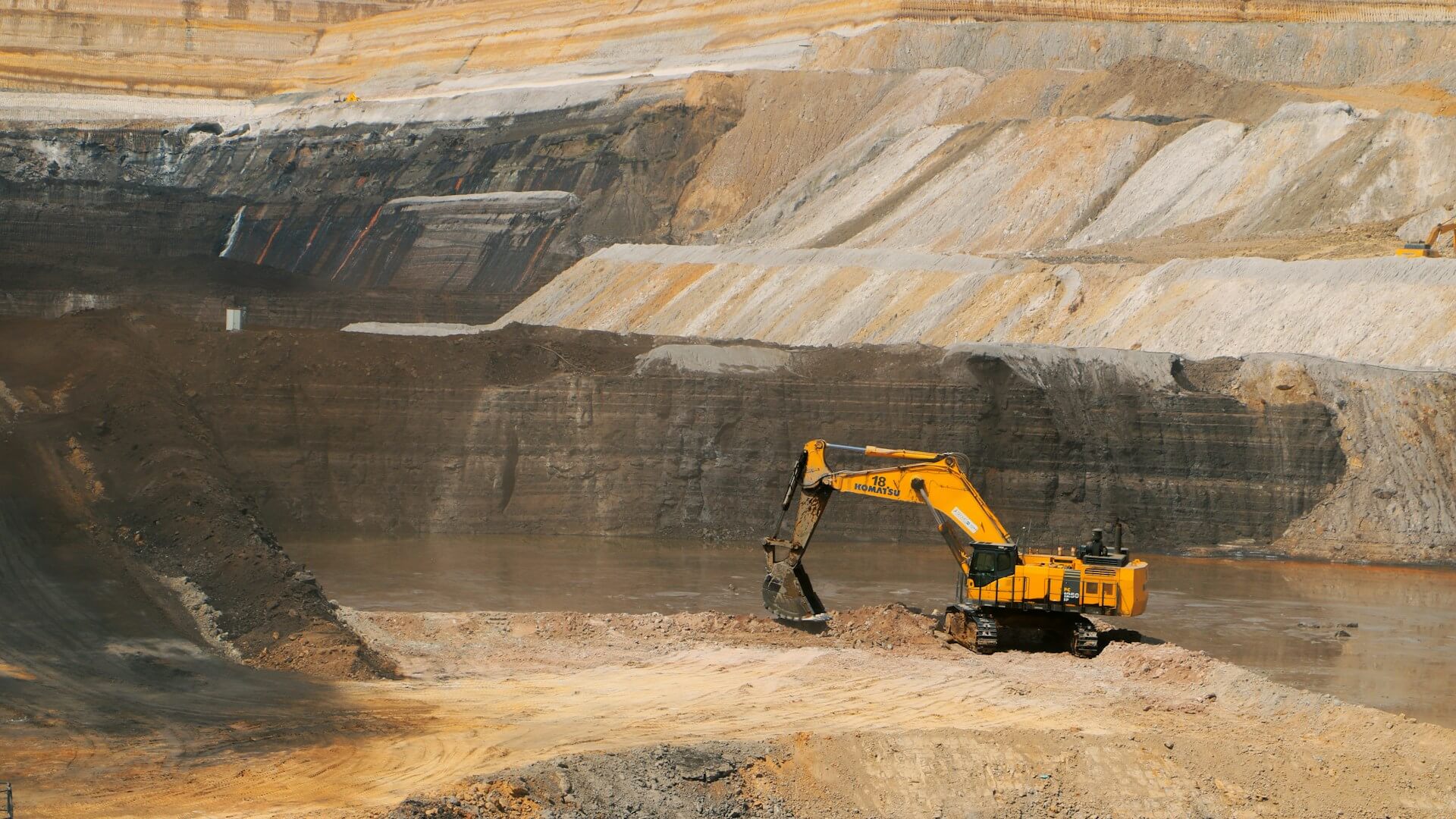
The most expensive misunderstanding in U.S. critical minerals policy is the assumption that mining is the bottleneck. It is not. The bottleneck is what happens to the ore after it leaves the pit: separation, solvent extraction, oxide production, metal reduction, and the production of high-purity alloys and magnets. MP Materials' Mountain Pass facility in California mines and produces light rare earth concentrate at world-class scale, and yet — as of the start of 2026 — almost all heavy rare earth separation for U.S. defense magnets still routes through Chinese facilities, because the midstream chemistry to separate dysprosium and terbium at military-grade purity exists at commercial scale almost nowhere else.
China's leverage in rare earths is not a story about reserves. It is a story about chemistry, capital, and twenty years of patient state investment in separation capacity. The U.S. policy response since 2022 has begun to close the gap. The remaining distance is significant, and where it lies is instructive.
Light vs. Heavy: The Asymmetry
Rare earths are conventionally divided into light (lanthanum through gadolinium) and heavy (terbium, dysprosium, holmium, erbium, thulium, ytterbium, lutetium, yttrium). Light rare earths are abundant; heavy rare earths are not. More important, dysprosium and terbium are what give a neodymium-iron-boron permanent magnet the temperature stability that makes it useful in an electric motor or a missile actuator at operating temperature (USGS Mineral Commodity Summaries, 2025).
China controls between 85% and 95% of global heavy rare earth separation. Lynas Corporation, the most significant non-Chinese producer, operates separation facilities in Malaysia (light) and is standing up heavy rare earth separation at its Kalgoorlie and Texas plants. Lynas Texas, partly funded by the U.S. Department of Defense, will be the first commercial-scale heavy rare earth separation facility on U.S. soil when it reaches steady-state in 2026–2027 (Lynas Rare Earths, 2025).
The MP Materials Trajectory
MP Materials' strategy is the cleanest case study in U.S. midstream catch-up. Mountain Pass produced approximately 43,000 tonnes of rare earth concentrate in 2024, putting it in the same league as the largest Chinese mines. The company's Independence facility in Fort Worth, Texas began producing neodymium-praseodymium oxide at commercial scale in 2024 and shipped its first magnet alloy in 2025 (MP Materials press release, 2025).
But oxide and alloy are still light rare earth steps. The heavy rare earth separation circuit — and the high-coercivity NdFeB magnet production that defense applications demand — is the next, harder problem.
The Other Players
Energy Fuels (Utah)
Energy Fuels' White Mesa Mill in Utah, originally a uranium mill, has become a unique U.S. asset: a permitted rare earth carbonate producer that processes monazite sand feedstock from multiple sources, including Chemours' Florida operations. White Mesa shipped its first mixed rare earth carbonate to Neo Performance Materials in 2024 (Energy Fuels, 2024). The path from carbonate to separated heavy rare earths is the next investment phase.
Lynas Texas — DPA Title III
The Department of Defense committed more than $258 million through the Defense Production Act Title III program to fund the Lynas Texas heavy rare earth separation facility (DPA Title III, 2024). The Texas plant, when operational, will separate the heaviest rare earths (Dy, Tb, Ho, Er) from feed shipped from Lynas's Australian mining and pre-processing operations.
USA Rare Earth (Round Top)
USA Rare Earth's Round Top mine in West Texas holds significant heavy rare earth reserves. The company's Oklahoma City magnet facility began producing NdFeB magnets in pilot quantities in 2024, and the company has signed offtake agreements with defense primes for FY2026–FY2027 deliveries (USA Rare Earth, 2024).
Where the Chemistry Gets Hard
Rare earth separation is solvent extraction at scale: hundreds of mixer-settler stages, organophosphorus extractants, and continuous chemistry that takes years to tune. Building a single mixer-settler line is capital-intensive but tractable. Building it to defense-grade purity (99.99%+ for dysprosium and terbium oxides) is a multi-year process. Sustaining production economics in a market where China can flood supply at will is a strategic question, not a chemistry question.
China's December 2024 export controls on antimony, gallium, germanium, graphite, and certain rare earth processing technologies were a marker: the leverage is in the midstream, and Beijing is increasingly willing to use it (U.S. Department of Commerce, 2024).
What Defense Primes Should Do Now
- Map magnet content to programs: every motor, every actuator, every gimbal that uses a NdFeB magnet has a heavy rare earth dependency. Many primes still don't have this mapping at the program level.
- Pre-buy and inventory heavy rare earth magnets: Title III dollars are funding capacity that will not deliver at full rate until 2027–2028. Build stockpile to bridge.
- Co-fund Independence-stage capacity: the DPA Title III dollar pool is not infinite. Primes willing to pre-fund midstream stages with offtake agreements move to the front of the line.
- Audit recycled rare earth opportunities: end-of-life motor and magnet recycling can supply 5–10% of demand if industrial-scale recyclers like Cyclic Materials and Noveon Magnetics can reach scale.
Magnet Production: The Last Step
Separated heavy rare earth oxides are an input. Sintered neodymium-iron-boron magnets are the output that defense applications actually require. The magnet production step — alloy melting, strip casting, jet milling, pressing, and sintering — has historically been almost entirely a Japanese, Chinese, and Vietnamese capability. The 2025 commissioning of USA Rare Earth's Oklahoma City magnet facility and Noveon Magnetics' production in San Marcos, Texas marked the first commercial NdFeB magnet production on U.S. soil in nearly two decades (USA Rare Earth, 2024).
The qualification timeline for defense-grade magnets is long. Each magnet specification — torque, temperature, demagnetization resistance — requires individual qualification against the end-item application. A magnet qualified for a Switchblade actuator does not automatically qualify for an EO/IR gimbal motor. Defense primes that built supplier qualification programs for magnets in 2023–2024 are now meaningfully ahead of competitors who waited.
Recycling and the Domestic Feedstock Loop
End-of-life rare earth recycling has long been a theoretical option that never quite became commercial reality at scale. The combination of DPA Title III funding, GreenStorm and Cyclic Materials' commissioning of automotive magnet recycling lines, and the Defense Logistics Agency's interest in recovered feedstock has changed the trajectory. By 2030, recovered magnets and oxides from end-of-life EV motors, wind turbine generators, and electronic waste streams could supply between five and ten percent of U.S. defense magnet demand (National Renewable Energy Laboratory, 2024).
Five percent sounds modest. It is meaningful because it represents a domestic, non-Chinese, non-import-dependent supply tail that did not exist in 2020. The defense industrial base does not need recycling to dominate supply. It needs recycling to provide a credible bridge during midstream capacity expansions.
The Allied Strategy: G7 Plus
The U.S. rare earth strategy has shifted in 2024–2026 from a strictly domestic posture to a 'G7-plus-trusted-allies' framework. Australia (Lynas), Canada (Saskatchewan and Quebec rare earth projects), and South Korea (post-processing capacity at POSCO) are now integrated into U.S. defense feedstock planning. The Minerals Security Partnership, launched in 2022, has begun to deliver on its premise of coordinated investment in trusted-partner midstream capacity (U.S. Department of State, 2025).
The shift matters because it changes the timeline. A purely domestic strategy delivers magnets in 2030. A G7-plus strategy delivers magnets in 2027 — at the cost of accepting that trust now extends beyond U.S. borders. Defense companies that build supply chains assuming the latter will outpace those that hold out for the former.
Closing the Midstream
The U.S. rare earth strategy of 2018–2022 fixated on mines. The strategy of 2024–2028 has rightly shifted to the midstream — separation, refining, magnet production — because that is where China's leverage actually lives. The next four years will determine whether the United States and its allies can move from concentrate to finished magnet without routing through Chinese facilities. The investments are real. The chemistry is hard. The clock is short. Mining is easy. Refining is everything.